
Safety at our clinic, from screening to follow-up
What we check before treatment is offered, what happens on the day, who administers it, and how your follow-up continues once you are home.
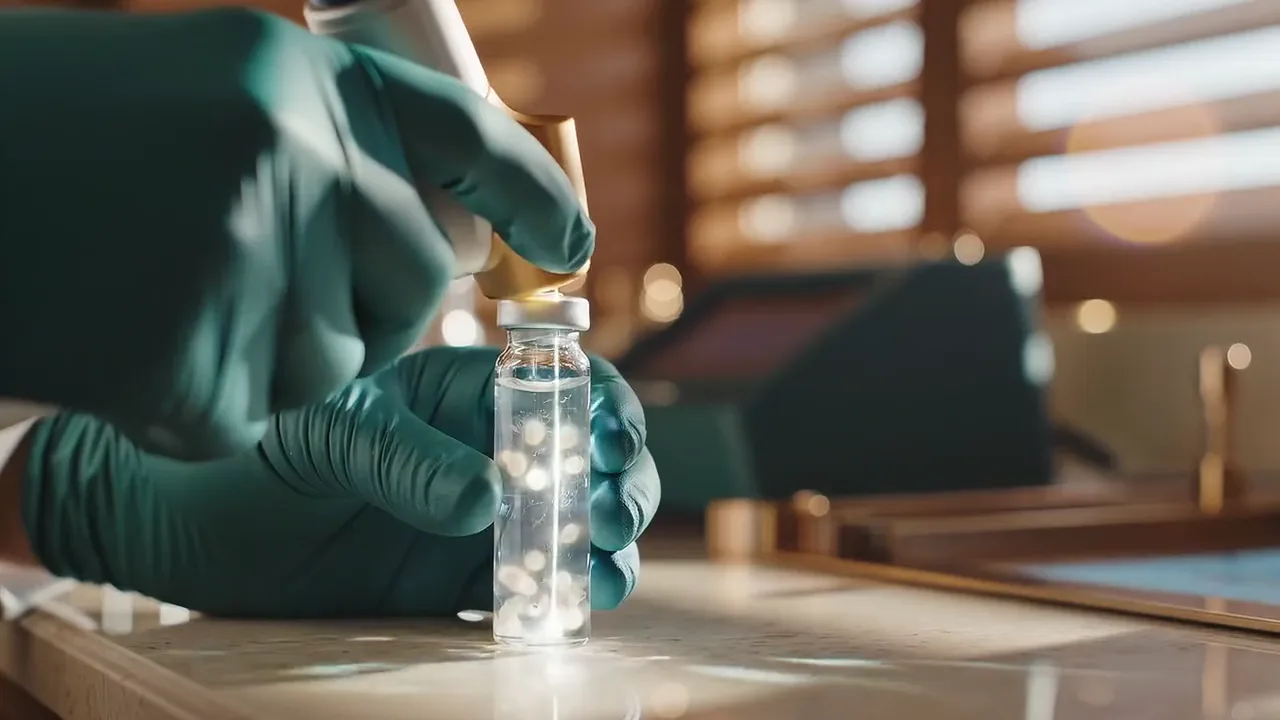
Editorial illustration of clinical documentation. It does not depict a procedure or a treatment outcome.
How we work
Three things are settled before treatment
Three documents sit behind every treatment here. The medical review explains why you may be suitable. The batch record identifies exactly what will be administered. Your written plan describes the route, the dose, the goals, the risks that apply to you and the follow-up.
Our medical team goes through all three with you before you agree to anything, and nothing is booked until they agree with each other.
How we screen before treatment is offered
A price is not an assessment, so we do not begin with one. Our medical team reviews enough of your history to explain whether regenerative medicine is a reasonable fit for your case, which goals could be set, and where the uncertainties lie. If we do not think treatment is appropriate, we say so and explain why.
- Your confirmed diagnosis and current clinical status
- Medical history, medicines, allergies, prior procedures, imaging and recent tests
- Active infection, cancer history, pregnancy, immune status, anticoagulation and travel fitness
- How a regenerative approach would sit alongside the care you already receive
Sourcing and handling
Wharton’s jelly: where our cells come from, and why.
We work with mesenchymal stromal cells from Wharton’s jelly, the gelatinous tissue inside the umbilical cord. It is collected after a healthy birth, with written maternal consent, from tissue that would otherwise be discarded. No harm comes to mother or baby, and none of the ethical questions attached to embryonic sources apply here.
It is also a young, perinatal source rather than adult bone marrow or fat, and it has a low-immunogenicity profile — which is why these cells are studied for use between unrelated people rather than requiring a patient’s own. They expand readily in culture, so a batch can be fully characterised and release-tested before any of it reaches a patient, and they are studied above all for what they secrete: the signalling molecules at the centre of most current MSC research. Before treatment begins, our team takes you through the origin of the material in your plan, how it was handled and what was checked.
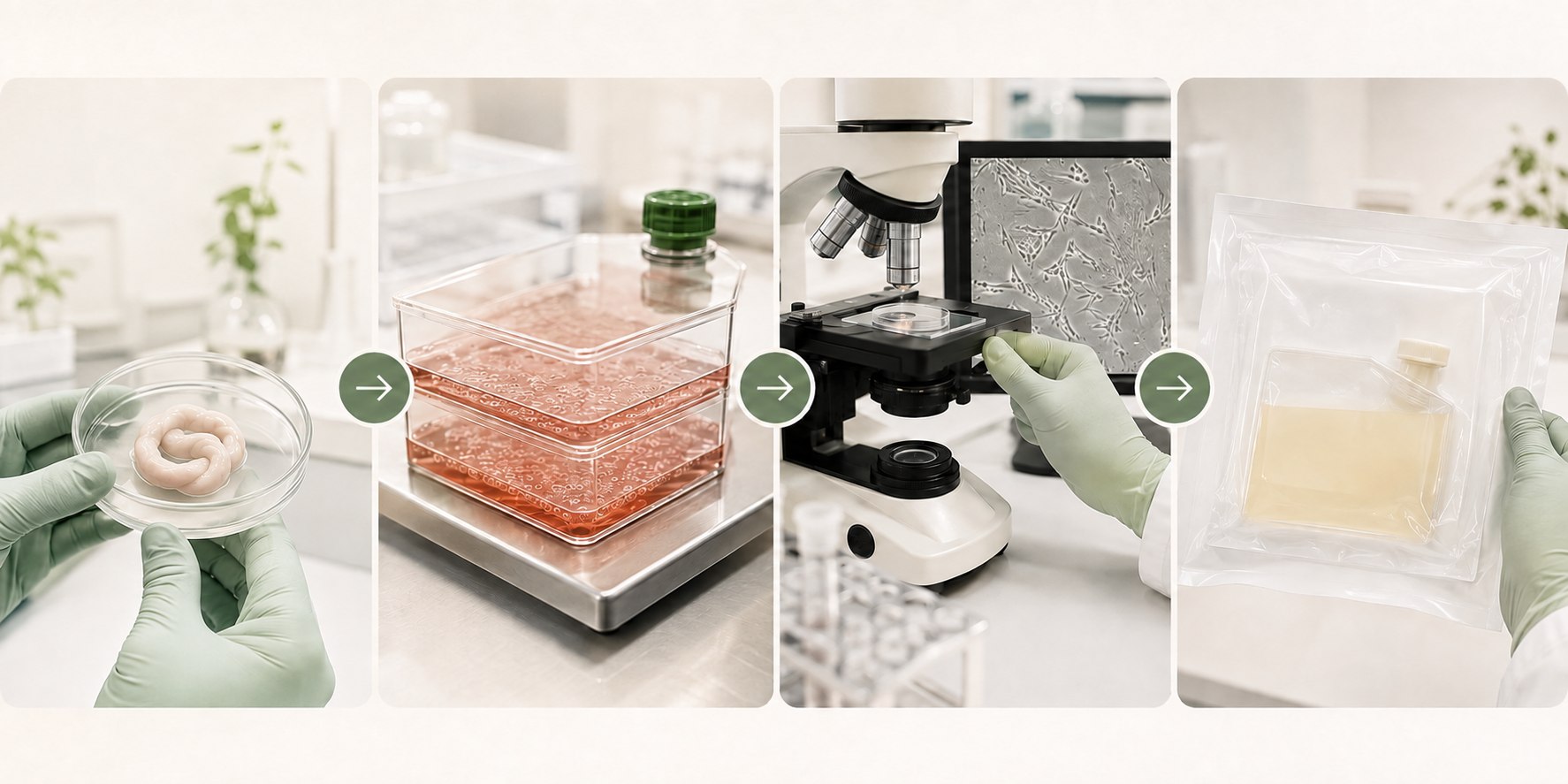
01 / ORIGIN
Donation and consent
The cord is donated after a healthy birth, with written maternal consent and documented donor screening.
02 / ISOLATION
Controlled processing
The cells are isolated from the tissue and expanded in culture, and our team explains where that work is done.
03 / VERIFICATION
Release testing
Identity, sterility, viability and contamination checks are recorded, and the results follow the batch.
04 / CUSTODY
Clinical handling
Storage, transport, preparation and traceability are documented for the material used in your plan.
On the day: preparation, administration and monitoring
Your batch is grown from Wharton's jelly, the gelatinous tissue inside a donated umbilical cord, and it arrives with its own certificate of analysis: identity testing, sterility and endotoxin results, viable cell count, passage, storage conditions and release criteria, together with the donor screening and traceability record. Because these cells expand readily in culture, a whole batch can be tested before any of it is used. Our team goes through that certificate with you, then the same details are checked again in the clinical setting before the dose is given.
Afterwards you receive written instructions for the rest of the day, what to report and when, and confirmation of when travel is reasonable.
- Identity, consent and current health are confirmed before anything is prepared
- The batch documentation is checked against the dose being given
- A physician administers the treatment using the route your plan names
- You are monitored during the procedure and for an observation period afterwards
Your journey
From your first records to your follow-up
The same five stages apply to every patient we treat, whether you travel from two hours away or from another continent.
Your records reach us
You send the confirmed diagnosis, medical history, current medicines, allergies, prior treatment and recent imaging or test results, along with the outcome that matters most to you.
Our medical team reviews
We assess suitability, contraindications and how a regenerative approach would sit alongside your existing care, and tell you if we do not think treatment is appropriate.
Your written plan
You receive the proposed cell source and preparation, the route and dose, the schedule, the goals to be reviewed afterwards, the risks that apply to you, and the costs, before anything is booked.
Your treatment day in Istanbul
Identity, consent and current health are confirmed, the batch documentation is checked against the dose, a physician administers it, and you are monitored during the procedure and for an observation period afterwards.
Follow-up after you travel home
You leave with a procedure summary, the product record, aftercare instructions, the signs that need attention and a named contact, and we review against the baseline at the agreed points.
After you travel home
Follow-up does more than ask whether you feel better. We record a baseline before treatment so there is something to measure against, then review the agreed outcomes, your medicines and anything you have reported at the points your plan sets out. International patients also leave with a practical route to local care if something needs examining in person.
Regenerative medicine treatments are planned individually. Responses vary and no clinical outcome can be guaranteed. Suitability is confirmed only after medical review, and treatment is planned alongside your existing care.
- A procedure summary and product record for your own physician
- Written aftercare instructions and the signs that need medical attention
- A named contact you can reach across time zones
- Agreed follow-up points, reviewed against the baseline recorded before treatment

Editorial view of Istanbul. This is not a clinic, medical facility, procedure, or treatment outcome.
Everything settled before you fly
Named clinicians, a written plan, the risks that apply to you, and follow-up that continues after you return home. Our patient coordination team arranges the rest.
Safety and process: your questions
Is stem cell therapy safe?
No medical treatment is free of risk, and we are direct about that. Our team reduces the risks that can be reduced: screened donor material, batch testing before release, administration by a physician in a clinical setting, monitoring during and after the procedure, and a written account of the side effects and contraindications that apply to your plan.
What happens during the screening review?
Our medical team reviews your confirmed diagnosis, recent imaging and test results, current medicines, allergies and treatment history. Active infection, cancer history, pregnancy, immune status, anticoagulation and current medication are all assessed before suitability is confirmed.
Who administers the treatment?
A physician, in a clinical setting, using the route your treatment plan names. Your plan identifies the clinician responsible, describes the consent and aftercare arrangements, and sets out what is monitored during and after the procedure.
What documentation do I receive?
The certificate of analysis for your Wharton's jelly MSC batch, covering identity testing, sterility and endotoxin results, viable cell count, passage, storage conditions and release criteria, alongside the donor screening and traceability record. You also leave with a summary of the procedure and written aftercare instructions.
What happens after I fly home?
Follow-up is arranged before you travel. We record a baseline beforehand, review against it at agreed points afterwards, and give you a named contact along with clear instructions on what to report and when. Your treatment is planned alongside the care you already receive at home.
Keep researching
Continue Exploring
Treatment
Stem Cell Therapy
Learn more→
Treatment
Intravenous Stem Cell Therapy
Learn more→
Treatment
Intrathecal Stem Cell Therapy
Learn more→
Treatment
Targeted Injection Therapy
Learn more→
Learn
Stem Cell Overview
Learn more→
Learn
How Stem Cells Work
Learn more→
Learn
MSC Therapy
Learn more→
Learn
Umbilical Cord Stem Cells
Learn more→

International patient support
Start with a medical case review.
Send your diagnosis, recent imaging and current medication. Our medical team assesses suitability, explains the risks that would apply to you, and sets out the plan and the follow-up before anything is booked.
Nothing needs to be booked to begin. Our patient coordination team plans your visit to Istanbul once your treatment plan is agreed.