
How exosomes carry signals between cells
A cell packs a tiny parcel, releases it, and another cell responds to what is inside. This page follows that journey from formation to treatment planning.
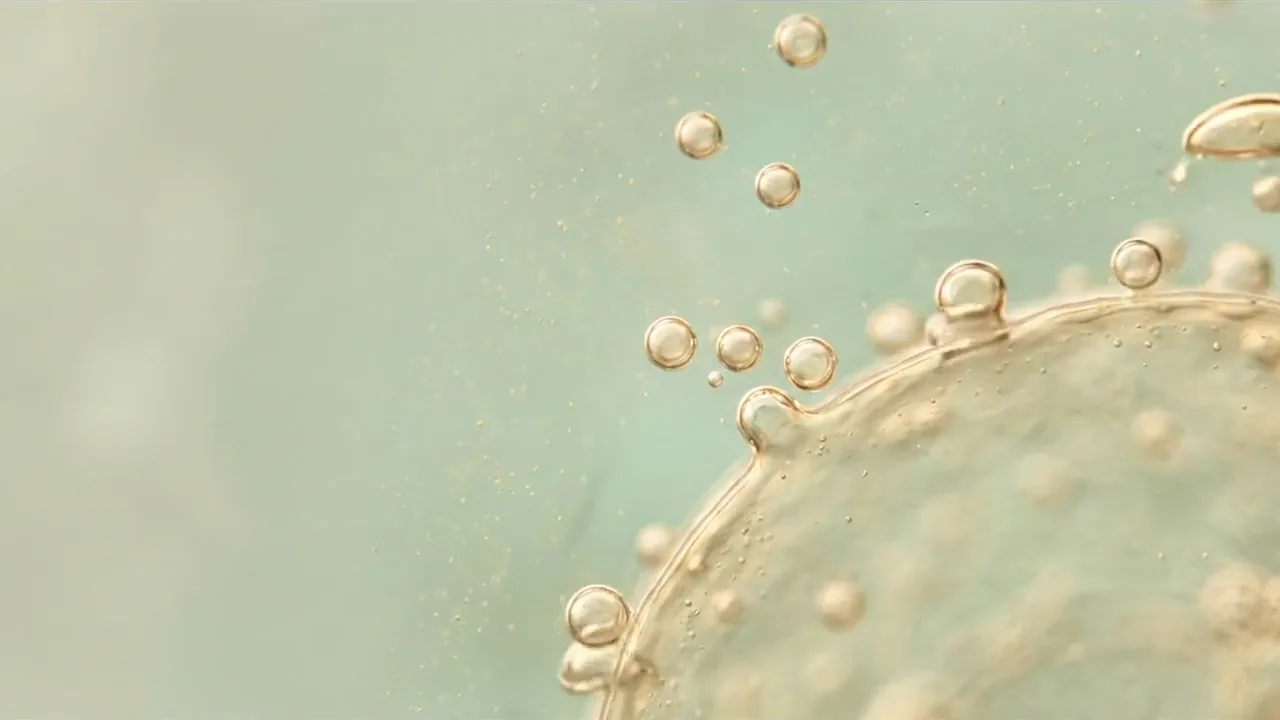
Editorial illustration of cell biology. It does not depict a procedure or a treatment outcome.
The short answer
A communication system, in one sentence
Cells release tiny packages that carry biological messages to other cells, and exosomes are one kind of those packages. Everything on this page is an unfolding of that sentence.
It is a genuinely good idea, and that is why the field has grown so quickly. If much of what one cell does for another travels inside these particles, then the particles can be collected, concentrated and characterised on their own - which is something you cannot do with a living cell.
We look at how a cell builds one of these parcels, what it puts inside, how a receiving cell takes the message, and what our medical team does with that biology when planning a treatment.
The sequence
How an exosome is formed
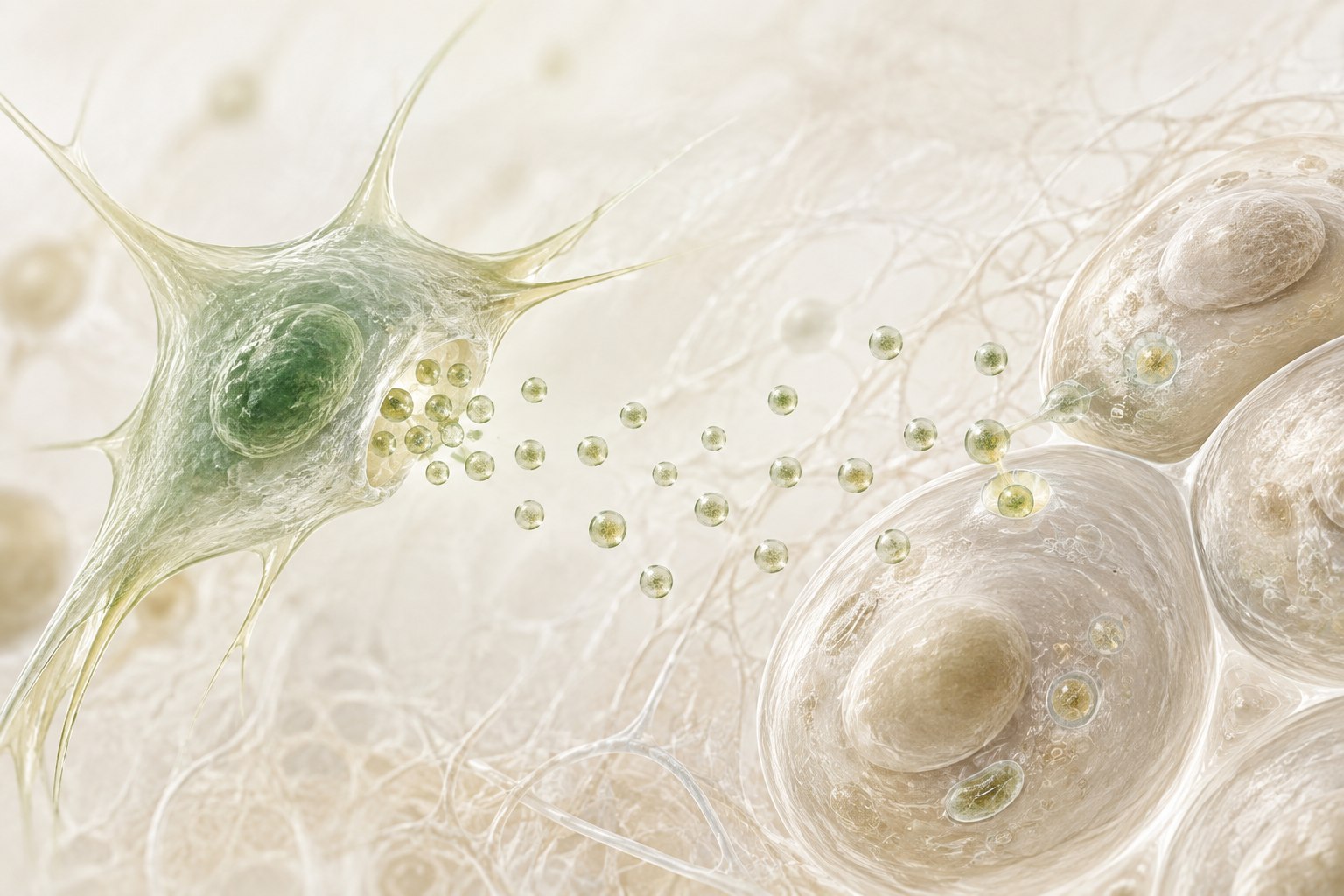
Exosomes begin inside the cell, within structures called multivesicular bodies. When one of those structures joins the outer membrane, the small vesicles held inside are released into the space around the cell. That route of formation is part of what distinguishes exosomes from other particles cells shed.
Because a collected preparation can also contain other small vesicles and soluble material, researchers often use the broader term small extracellular vesicles when describing what they are working with.
A cell folds part of its membrane inward to create an internal compartment
Smaller vesicles form inside that compartment and are loaded with selected cargo
The compartment merges with the outer membrane of the cell
The vesicles are released and travel through the fluid around the cell
Stem cells and exosomes are different.
One is a living cell. The other is a cell-derived messenger. The difference shapes how each is sourced, how it is given, and which one our medical team may propose for your case.
- 01 / SOURCE
Living source cells
Mesenchymal stromal cells are living cells. Their behavior depends on source, handling, dose, and biological context.
- 02 / SIGNAL
Released signals
Cells release soluble factors and extracellular vesicles. Exosomes are one subset of these small vesicles.
- 03 / RESPONSE
Local cell response
Nearby cells may respond to those signals. That biological rationale is where treatment planning starts, not a promise of a result.
The cargo, and how a cell receives it
The contents of an exosome reflect the cell that made it and the conditions that cell was grown in. Proteins and lipids sit in and on the membrane, while signalling molecules and genetic messages such as RNA and microRNA travel inside.
When a vesicle reaches another cell, it may activate a receptor on the surface or deliver its contents into the cell. This is the point of the whole system, and it is elegant: one cell influencing how its neighbours behave, without either of them having to move.
- Proteins, lipids, signalling molecules and RNA including microRNA
- Surface molecules that influence which cells a vesicle reaches
- A receiving cell may bind the vesicle, take it in, or merge with it
- What follows depends on the cargo, the receiving cell and the tissue around it
What that signalling is studied to influence
Much of the research asks whether exosome cargo can influence inflammatory signalling, which is why musculoskeletal use around joints and tendons is one of the main questions in the field. Other work looks at support for the tissue environment, where growth factors and matrix signals shape how skin, hair follicles and soft tissue behave.
Aesthetic, hair and musculoskeletal applications are investigated separately. Promising work in one area does not carry over automatically to another, and each is planned on its own terms.
- Inflammatory signalling: the chemical conversation behind swelling, redness and pain
- The tissue environment, including growth factors and the matrix surrounding cells
- Skin quality and the visible signs of ageing, in aesthetic research
- Hair follicles and the scalp, and the structures around joints and tendons
From the biology to your treatment plan
Exosome preparations differ in how they are produced and characterised, so documentation is part of treatment planning. Our team is specific about the preparation planned for you: where it comes from, how it was produced and characterised, the testing it passed before release, and how it is stored and handled up to the moment it is given.
Regenerative medicine treatments are planned individually. Responses vary and no clinical outcome can be guaranteed. Suitability is confirmed only after medical review, and treatment is planned alongside your existing care.
- The concern is assessed first, so the target is known before a route is chosen
- A baseline is recorded, including standardised photographs for skin and scalp goals
- The route follows the goal: a skin or scalp procedure, a local injection, or an intravenous infusion
- A clinician administers the preparation, and your plan states what we watch for afterwards

Editorial view of Istanbul. This is not a clinic, medical facility, procedure, or treatment outcome.
From the science to a plan for you
Understanding the mechanism makes the conversation easier. What decides your treatment is the assessment of your skin, scalp or joint, and the goal our medical team can set from it.
How exosomes work: your questions
How do exosomes work?
They carry biological cargo from one cell to another. A cell packs proteins, lipids, signalling molecules and RNA into a tiny membrane-wrapped particle and releases it, and a receiving cell may bind it, take it in, or merge with it and respond to what is inside.
What is inside an exosome?
Cargo from the cell that made it: proteins, lipids, signalling molecules and genetic messages such as RNA and microRNA. The mixture reflects the parent cell and the conditions it was grown in, which is why the source of a preparation matters.
How does a cell receive the message?
Research describes several routes. A vesicle may bind to a receptor on the cell surface, be taken into the cell, or merge with the cell membrane and release its cargo inside. What follows depends on the cargo, the receiving cell and the tissue around it.
Do exosomes stay in the body?
They are not permanent implants. How they distribute and how quickly they clear depends on the preparation, the dose, the route and the person. The research describes a period of biological signalling rather than something that remains in place.
Are exosomes the same as stem cells?
No. Stem cells are living cells that release these particles among many other things. An exosome preparation contains the particles and no cells at all. Our stem cells and exosomes comparison sets the two side by side.

International patient support
Ask which exosome route would suit your goal.
Tell our medical team what you would like to improve and send the records you have. We will explain whether a skin, scalp, joint or intravenous route fits, and what treatment in Istanbul would involve.
Nothing needs to be booked to begin. Our patient coordination team plans your visit to Istanbul once your treatment plan is agreed.