
Exosomes: the messages cells send each other
Tiny particles released by cells carry biological cargo between them. Here is what that cargo is, what researchers are investigating, and where our team uses exosome preparations.
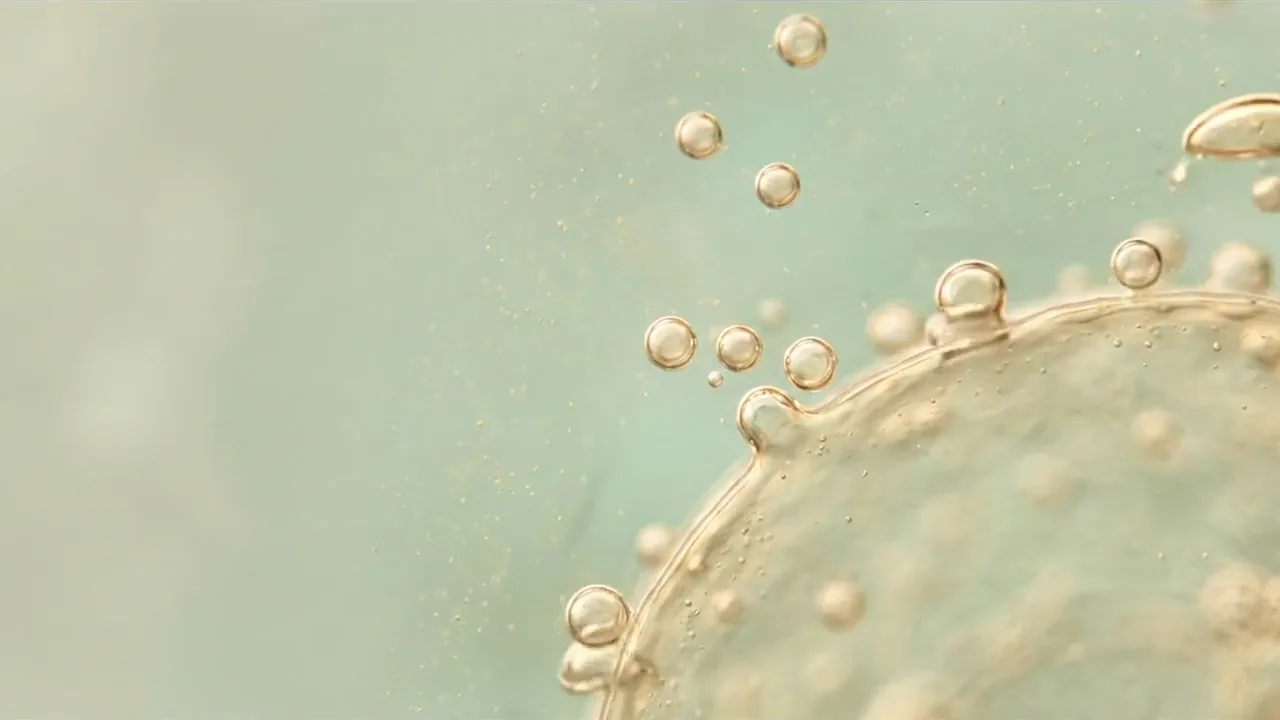
Editorial illustration of cell biology. It does not depict a procedure or a treatment outcome.
Understanding the science
Start with one idea: cells send packages
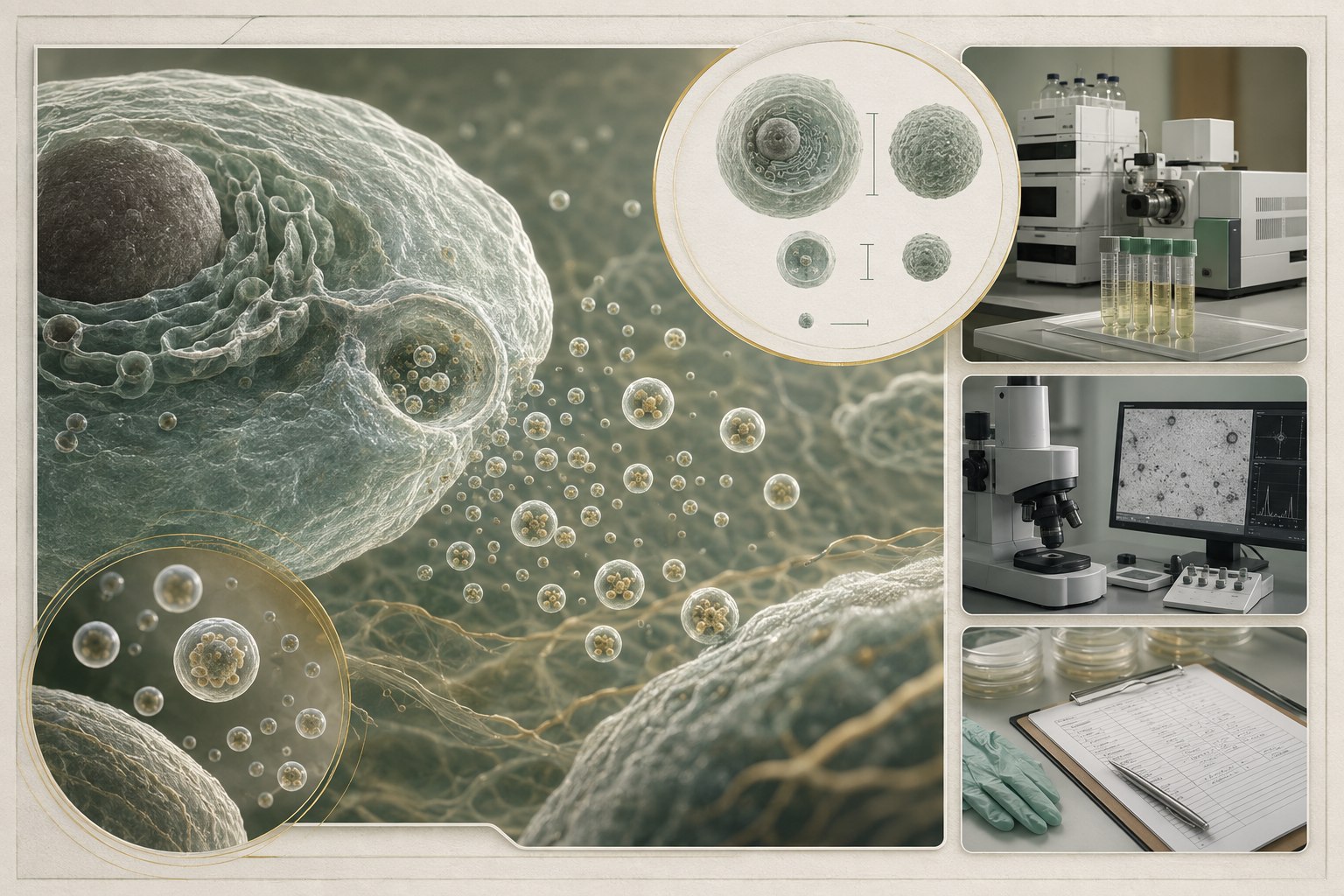
Cells talk to one another by releasing tiny packages into the space around them. Exosomes are one kind of those packages, far too small to see without a microscope, and each carries cargo from the cell that made it.
That is the whole idea, and everything else on these pages builds on it: what is inside the package, what a receiving cell may do with it, and where our medical team uses exosome preparations in a treatment plan.
It is also why this has become one of the most active areas in regenerative medicine. A great deal of what cells are studied to do for one another turns out to travel inside these particles, and unlike a living cell, a particle can be collected, concentrated and characterised on its own.
What an exosome is, and what it carries
An exosome is a small membrane-wrapped parcel that a cell packs and releases. Inside are proteins, lipids, signalling molecules and genetic messages such as RNA and microRNA. Biologists group exosomes within the wider family of extracellular vesicles.
The cargo is the part researchers care about, because it is one of the ways a cell changes the behaviour of the cells beside it. Cells release these vesicles continuously, which is why the field studies them as a natural communication system rather than as something invented in a laboratory.
- A tiny particle released by a living cell, one class of extracellular vesicle
- Cargo from its parent cell: proteins, lipids, signalling molecules and RNA including microRNA
- A normal channel of cell-to-cell communication, not a manufactured drug
- Containing no living cells, which is why it is sometimes planned where a cell product is not the right fit
Stem cells and exosomes are different.
One is a living cell. The other is a cell-derived messenger. The difference shapes how each is sourced, how it is given, and which one our medical team may propose for your case.
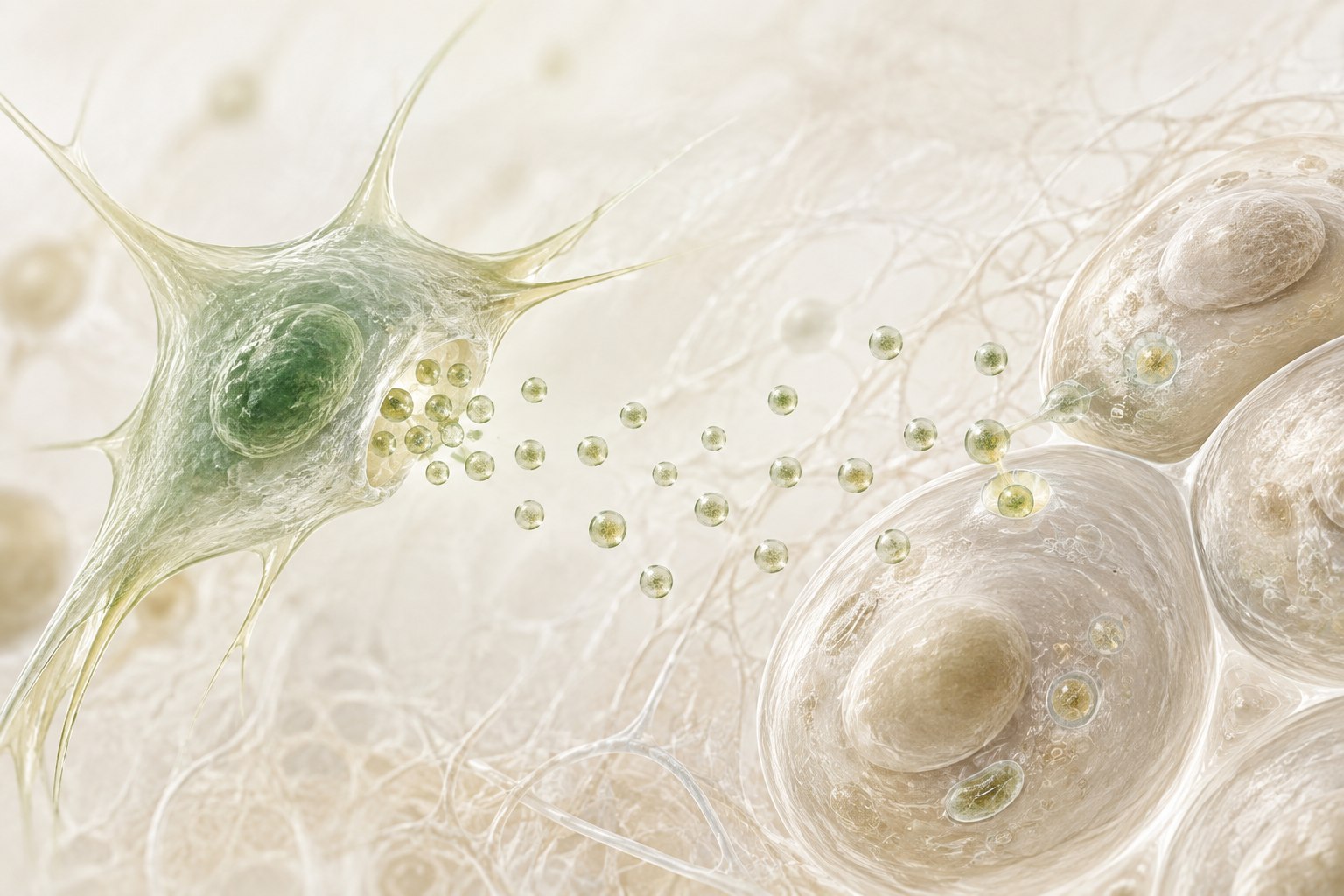
- 01 / SOURCE
Living source cells
Mesenchymal stromal cells are living cells. Their behavior depends on source, handling, dose, and biological context.
- 02 / SIGNAL
Released signals
Cells release soluble factors and extracellular vesicles. Exosomes are one subset of these small vesicles.
- 03 / RESPONSE
Local cell response
Nearby cells may respond to those signals. That biological rationale is where treatment planning starts, not a promise of a result.
What the research is investigating
Inflammatory signalling is where most of the work sits: the chemical conversation behind swelling, redness and pain is exactly the kind of conversation these particles take part in. Other research looks at support for the tissue environment, the growth factors and matrix signals surrounding skin, hair follicles, tendons and joints. Skin and scalp applications are among the most researched of all, and they are a large part of what patients ask us about.
Aesthetic, hair and musculoskeletal applications are investigated separately, so interest in one does not transfer automatically to another. Our medical team is specific about which of them your plan is built around.
- Inflammatory signalling: the chemical conversation behind swelling, redness and pain
- The tissue environment, including growth factors and the matrix that surrounds cells
- Skin quality and the visible signs of ageing, in aesthetic research
- Thinning hair and the scalp, and joint, tendon and soft-tissue problems
How your exosome treatment is planned in Istanbul
Exosome preparations differ in how they are produced and characterised, so documentation is part of treatment planning. Our team is specific about the preparation planned for you: where it comes from, how it was produced and characterised, the testing it passed before release, and how it is stored and handled up to the moment it is given.
Regenerative medicine treatments are planned individually. Responses vary and no clinical outcome can be guaranteed. Suitability is confirmed only after medical review, and treatment is planned alongside your existing care.
- The concern is assessed first, so the target is known before anything is planned
- A baseline is recorded, including standardised photographs for skin and scalp goals
- The route follows the goal: a skin or scalp procedure, a local injection, or an intravenous infusion
- Sessions are planned from what the review shows rather than booked as a standing course

Istanbul, Turkey
Editorial view of the Bosphorus. It does not depict a clinic or treatment outcome.
Your plan is agreed before you travel
Tell our team what you would like to improve and send the relevant records. The goal, the route and the schedule are settled from home, and your visit to Istanbul is arranged afterwards.
Exosome questions patients ask us
What are exosomes?
Exosomes are tiny particles released by living cells, one class of what biologists call extracellular vesicles. Each one carries cargo from the cell that made it: proteins, lipids, signalling molecules and genetic messages such as RNA and microRNA.
Why do researchers study exosomes?
Because much of what cells are studied to do for one another travels inside these particles, and the particles can be collected, concentrated and characterised on their own. That is why extracellular vesicles have become one of the most active areas in regenerative medicine, particularly in research on inflammatory signalling and the tissue environment.
Are exosomes the same as stem cells?
No. A cell product contains living cells. An exosome preparation contains the signalling particles cells release, and no cells at all. One delivers cells, the other delivers the messages cells send.
What is exosome therapy used for?
The most common applications are skin quality, thinning hair and scalp concerns, and joint, tendon and soft-tissue problems. Each is planned separately, with its own target, its own measure and its own consent.
How is an exosome preparation given?
As a skin or scalp procedure, as a local injection into or beside a joint or tendon, or as an intravenous infusion. The route follows the goal set in your plan rather than preference, and a clinician administers it.
Keep researching
Continue through the science guides
Treatment
Exosome Therapy
Learn more→
Treatment
Stem Cell Therapy
Learn more→
Learn
MSC Therapy
Learn more→
Learn
How Stem Cells Work
Learn more→
Exosomes
How Exosomes Work
Continue through the exosome science guides.
Learn more→
Exosomes
Stem Cells vs Exosomes
Continue through the exosome science guides.
Learn more→
Exosomes
Exosome FAQ
Continue through the exosome science guides.
Learn more→
Exosomes
Exosome Therapy Cost in Istanbul
Continue through the exosome science guides.
Learn more→
International patient support
Ask about exosome treatment for your case.
Tell our medical team what you would like to improve, whether that is skin quality, thinning hair or a painful joint, and send the records you have. We will explain which route we would propose and what your treatment in Istanbul would involve.
Nothing needs to be booked to begin. Our patient coordination team plans your visit to Istanbul once your treatment plan is agreed.