
Mesenchymal Stem Cell Therapy
A clearer explanation of why MSCs are discussed so often in regenerative medicine, how they work, and how they fit into real treatment planning.
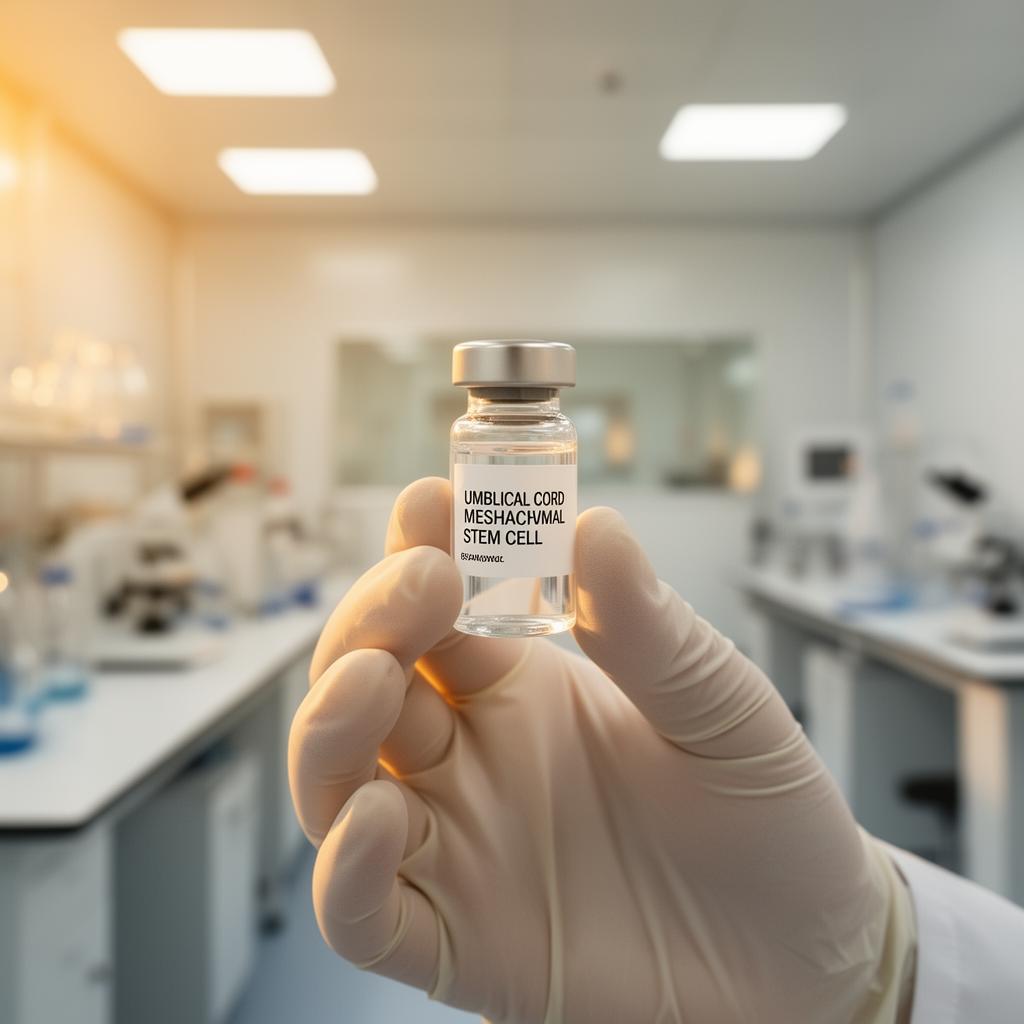
Overview
Why MSC therapy sits at the center of regenerative medicine
Mesenchymal stem cell therapy, usually shortened to MSC therapy, is one of the most frequently discussed topics in regenerative medicine. Patients come across it in conversations about autoimmune conditions, neurological issues, chronic inflammation, orthopedic concerns, and broader repair-oriented treatment planning.
The reason MSC therapy receives so much attention is that these cells are associated with several of the mechanisms that define modern regenerative medicine: signaling, immune modulation, inflammatory balance, and support around stressed tissue. This page is designed to make that discussion easier to understand.
Stem Cell Overview
→Start with the broader stem cell overview page if you want the full science context first.
How Stem Cells Work
→Learn more about signaling, immune modulation, and the mechanisms behind stem cell therapy.
Umbilical Cord MSC Therapy
→Move from MSC science into a treatment-focused page on UC-MSC therapy.
Safety and Process
→Read more about treatment planning, patient preparation, and common process questions.
What MSCs Do
Why MSCs are discussed as biologically active repair-supportive cells
MSC therapy is usually discussed less as a pure replacement strategy and more as a signaling-based regenerative medicine approach. In many cases, the most important part of the conversation is not that the cells become new tissue directly, but that they may influence the environment around stressed or injured tissue.
That is why MSCs are often described as biologically active support cells. They are associated with the release of signals that may influence how nearby tissues, inflammatory pathways, and immune responses behave.
- Associated with paracrine signaling and messenger release
- Often discussed for immune modulation and inflammatory balance
- Relevant to communication between cells and tissues rather than simple replacement alone
- Frequently explored in chronic, degenerative, autoimmune, and neurological treatment discussions
Paracrine Signaling
Why signaling is usually the key mechanism
In modern regenerative medicine, paracrine signaling is one of the most important concepts in MSC therapy. Rather than thinking only in terms of direct tissue replacement, patients should understand that much of the discussion centers on the signals MSCs may release into the surrounding environment.
These signals are part of why MSC therapy is discussed in such a wide range of conditions. The focus is often on communication, regulation, and support for repair-oriented biological responses.
- MSCs are associated with release of growth factors and signaling molecules
- These signals may influence nearby cells and tissues
- This helps explain why MSC therapy appears in so many different treatment conversations
- It also helps explain the overlap between MSC therapy and exosome discussions
Immune Modulation
Why MSCs appear in autoimmune and inflammatory discussions
One of the most important reasons MSC therapy is discussed so often is its relationship to immune modulation. Patients researching autoimmune, inflammatory, or chronic degenerative conditions frequently encounter MSCs because the conversation is not only about repair, but also about how the body’s signaling environment may be influenced.
- MSCs are often discussed in relation to immune balance
- They may influence inflammatory signaling pathways
- This makes them central to many chronic inflammatory and autoimmune conversations
- Immune modulation is one of the main reasons patients ask about MSC therapy
Conditions Explored
Where patients commonly ask about MSC therapy
Patients commonly explore MSC therapy in discussions related to autoimmune disease, neurological conditions, joint and orthopedic problems, chronic inflammation, metabolic issues, and degenerative disorders. That does not mean every patient is automatically a candidate. It means MSC therapy is one of the most common starting points in regenerative medicine research.
The best next step is always case-specific review rather than assumption. Diagnosis, reports, imaging, medication list, and treatment goals all matter.
Treatment Context
How MSC therapy connects to real treatment planning
MSC therapy is not one single identical protocol. The discussion may involve different routes of administration, different treatment structures, and different goals depending on the case. Some patients may be discussing broader systemic support, while others may be exploring more targeted or specialized pathways.
That is why the most useful path is usually to compare this page with the treatment pages, the deeper stem cell science pages, and then request a proper review if the discussion seems relevant.
FAQ
MSC Therapy — Frequently Asked Questions
How are MSCs usually delivered?
That depends on the treatment plan. MSC discussions commonly involve intravenous administration, and in selected cases more localized or specialized routes may also be considered.
How many treatments are usually needed?
There is no universal number. Treatment structure depends on the condition, treatment goals, route of administration, and the broader clinical picture.
Are there side effects?
Safety depends on sourcing, manufacturing standards, administration route, physician oversight, and patient selection. Mild short-term reactions are sometimes discussed, but proper case review remains essential.
Why are MSCs discussed so often in regenerative medicine?
Mesenchymal stem cells are widely discussed because they are associated with paracrine signaling, immune modulation, inflammatory balance, and support around stressed or injured tissue.
Related Pages
Continue Exploring
Treatment
Stem Cell Therapy
Learn more→
Treatment
Umbilical Cord MSC Therapy
Learn more→
Treatment
Intravenous Stem Cell Therapy
Learn more→
Treatment
Targeted Injection Therapy
Learn more→
Learn
Stem Cell Overview
Learn more→
Learn
How Stem Cells Work
Learn more→
Learn
Safety and Process
Learn more→
Learn
Umbilical Cord Stem Cells
Learn more→
Exosomes
How Exosomes Work
Learn more→
Exosomes
Stem Cells vs Exosomes
Learn more→
Want to know whether MSC therapy is relevant for your case?
Send your diagnosis, reports, imaging, and treatment goals for a clearer case review. We will help you understand whether an MSC-based discussion in Istanbul is worth exploring further.