Umbilical Cord MSC Therapy in Istanbul
The most studied source of mesenchymal stem cells — young, potent, ethically donated, fully screened, and processed to GMP-aligned standards in our Kadıköy clinic for autoimmune, neurological, and degenerative conditions.
Treatment Overview
Understanding Umbilical Cord MSC Therapy
This page is designed to help patients understand what umbilical cord msc therapy is, how it is typically discussed in regenerative medicine, and which kinds of cases often lead people to explore it further. The goal is not to make exaggerated promises, but to create a clearer and more useful starting point before a real case review.
Overview
What Is Umbilical Cord MSC Therapy?
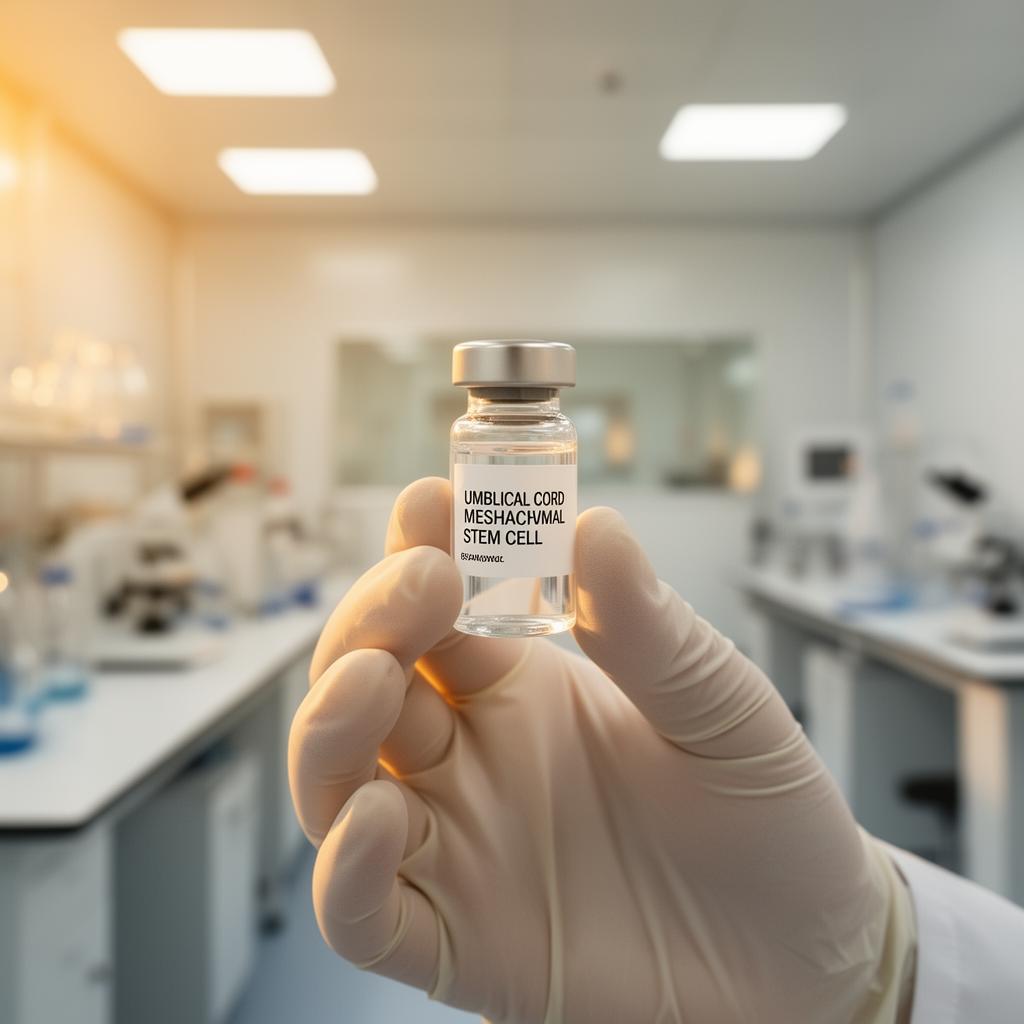
Umbilical cord-derived mesenchymal stem cells (UC-MSCs) come from screened umbilical cords donated voluntarily after healthy births. They are young, biologically potent, and immunologically privileged — meaning donor-recipient matching is not required.
UC-MSCs are widely studied in regenerative medicine for autoimmune support, neurological conditions, and degenerative joint and tissue conditions. They are increasingly preferred over older bone-marrow or adipose sources due to higher proliferation rates, easier processing, and lower immunogenicity.
At our Istanbul clinic, every UC-MSC batch is characterized for viability, surface markers (CD73, CD90, CD105), and sterility before administration. We work only with GMP-aligned laboratory partners — quality is never compromised for cost.
How It Works
The Science, Clearly Explained
The discussion around umbilical cord msc therapy is grounded in regenerative medicine, biological signaling, and case-specific treatment planning. The exact relevance of this pathway depends on the diagnosis, the treatment goals, the route of administration, and the broader clinical picture.
- High proliferation and potency at the young donor cell age
- Low immunogenicity — no donor-recipient HLA matching required
- Strong immunomodulatory and anti-inflammatory profile
- Ethically sourced from screened, consenting maternal donations after healthy births
- Quality-controlled cell count, viability, and surface marker characterization for every dose
Candidacy
Who Commonly Explores This Treatment?
Good candidacy assessment is always case-specific. The most useful next step is usually to review diagnosis, medical history, reports, imaging, current medications, and treatment goals before deciding whether this pathway makes sense to explore further.
- Wide range of chronic, autoimmune, and degenerative conditions
- Autoimmune dysregulation — lupus, RA, MS, psoriasis, IBD, scleroderma
- Degenerative joint, spine, and tissue conditions
- International patients seeking premium, GMP-aligned cell sourcing rather than the cheapest option
Realistic Outcomes
What Patients Often Hope to Improve
Regenerative medicine should be discussed honestly. Outcomes vary from patient to patient, and no ethical treatment conversation should promise guaranteed results. What matters most is whether this pathway is relevant to the case and whether expectations are being set clearly from the start.
- Reported improvements in inflammation markers, mobility, energy, and quality of life
- Outcomes vary by condition and individual patient — always discussed honestly
- Best results with structured follow-up and consistent supportive care
- Often complements other regenerative protocols — exosomes, IV vitamin therapy, rehabilitation
Your Path
The Patient Journey
A structured path from first contact to treatment planning and follow-up.
- Step01
Free Case Review
Send your diagnosis, recent reports, imaging, and current medications. Our Istanbul medical team replies within one business day with a clear, personalized assessment — no obligation.
- Step02
Personalized Protocol
If you are a candidate, our specialists design your treatment plan: cell or therapy type, dose, route of administration, schedule, and supportive care — built around your case, not a template.
- Step03
Arrival & Welcome
We arrange your airport pickup, premium accommodation near the clinic, and a calm pre-treatment consultation. Most international patients arrive one day before treatment so they can rest, settle in, and meet the medical team.
- Step04
Treatment in Istanbul
Your treatment is delivered in 1–2 focused days at our Istanbul clinic, with full medical monitoring, English / Arabic / Russian translator support, and a clear daily schedule so you always know what to expect.
- Step05
Long-Term Follow-Up
After you return home, we track your progress remotely at 1, 3, 6, and 12 months — adjusting supportive guidance as your body responds and staying available whenever you have a question.
FAQ
Umbilical Cord MSC Therapy — Frequently Asked Questions
Why umbilical cord cells specifically?
UC-MSCs are young, biologically potent, and have low immunogenicity — making them widely preferred over older bone-marrow or adipose-derived sources, and they don't require donor matching.
Which conditions is UC-MSC therapy most often discussed for?
UC-MSC therapy is most commonly discussed for autoimmune conditions (lupus, RA, MS, psoriasis, IBD, scleroderma), neurological cases, and degenerative joint and tissue conditions. Suitability is always reviewed individually before a protocol is proposed.
Are your UC-MSCs GMP-aligned?
Yes. Every batch comes from screened umbilical cord donations and is processed in GMP-aligned laboratory partners. Viability, count, and CD73/CD90/CD105 surface markers are confirmed before every administration — quality is never compromised for cost.
How does the free international case review work?
You send your diagnosis, recent reports, imaging, and current medications. Our Istanbul medical team replies within one business day with an honest assessment, transparent pricing, and clear next steps — at no cost and with no obligation.
Are donations ethical?
Yes. Cells come from voluntary maternal donations after healthy births in screened pregnancies, with full informed consent and donor screening for infectious disease and genetic markers.
Do I need to be a tissue match?
No — UC-MSCs are immunologically privileged and do not require HLA matching, which makes treatment planning much simpler for international patients.
Are there side effects?
UC-MSC therapy is generally very well tolerated. Mild flu-like symptoms can occur briefly within 24–48 hours. Severe reactions are rare in qualified hands.
How do I know if I am a candidate for this treatment in Istanbul?
Candidacy is reviewed case by case. After you send your diagnosis, recent reports, imaging, and current medications, our Istanbul medical team will tell you honestly whether this regenerative pathway is appropriate for you — and what realistic outcomes might look like.
How long do international patients usually stay in Istanbul?
Most international patients stay 3–4 days in Istanbul: one day to arrive and rest, 1–2 focused treatment days at our clinic, and a final day for monitoring before flying home. We help coordinate flights, accommodation near the clinic, and translator support so the trip feels organized and calm.
Is this treatment safe?
Mesenchymal stem cell and exosome therapies have a well-documented safety profile in published clinical literature when performed correctly. At our Istanbul clinic, every protocol uses GMP-aligned cells, sterile technique, and qualified medical specialists with continuous monitoring.
Can this treatment cure my condition?
No ethical clinic can promise a cure. Regenerative medicine is supportive — it aims to modulate inflammation, support tissue repair, and improve quality of life. We focus on transparent expectations and realistic, hopeful outcomes that match your specific case.
How much does this treatment cost in Istanbul?
Pricing is case-specific and depends on the protocol, cell dose, route of administration, and number of sessions. After your free case review, we provide a clear written quote — no hidden fees, no pressure.
What does the international patient program include?
Medical consultation, lab work, the treatment itself, in-clinic monitoring, airport transfers, accommodation guidance, translator support, and structured remote follow-up after you return home.
Related Pages
Pages related to Umbilical Cord MSC Therapy
Treatment
Stem Cell Therapy
Explore another related regenerative treatment pathway.
Learn more→
Treatment
Intravenous Stem Cell Therapy
Explore another related regenerative treatment pathway.
Learn more→
Treatment
Exosome Therapy
Explore another related regenerative treatment pathway.
Learn more→
Treatment
Intrathecal Stem Cell Therapy
Explore another related regenerative treatment pathway.
Learn more→
Condition
Multiple Sclerosis (MS)
See how this condition is discussed and what patients commonly explore.
Learn more→
Condition
Rheumatoid Arthritis
See how this condition is discussed and what patients commonly explore.
Learn more→
Condition
Lupus (Systemic Lupus Erythematosus)
See how this condition is discussed and what patients commonly explore.
Learn more→
Condition
Osteoarthritis
See how this condition is discussed and what patients commonly explore.
Learn more→
Condition
Premature Ovarian Failure (POF)
See how this condition is discussed and what patients commonly explore.
Learn more→
Ready to Explore Umbilical Cord MSC Therapy?
Send your diagnosis, reports, imaging, and treatment goals for a clearer case review. We will help you understand whether this regenerative medicine pathway in Istanbul is worth exploring further.